
The Agentic Software Development Guide
A practical guide for engineering leaders setting intent, verifying AI output and governing agentic delivery at scale.
Why this field guide exists
AI makes it easy to ship more code. It does not make that code easier to trust. Most teams don’t fail because their developers can’t use AI. They fail because the dev’s job changed and nobody redefined it.
- Under AI, cracks appear:
- Reviews weaken while output multiplies
- Code looks clean, but nobody actually understands it
- Verification gets bolted on after the fact, if it happens at all
- Speed goes up while accountability quietly goes missing
This field guide shows how high-performance teams set intent, verify AI output and govern agentic delivery without slowing down.
What you’ll learn
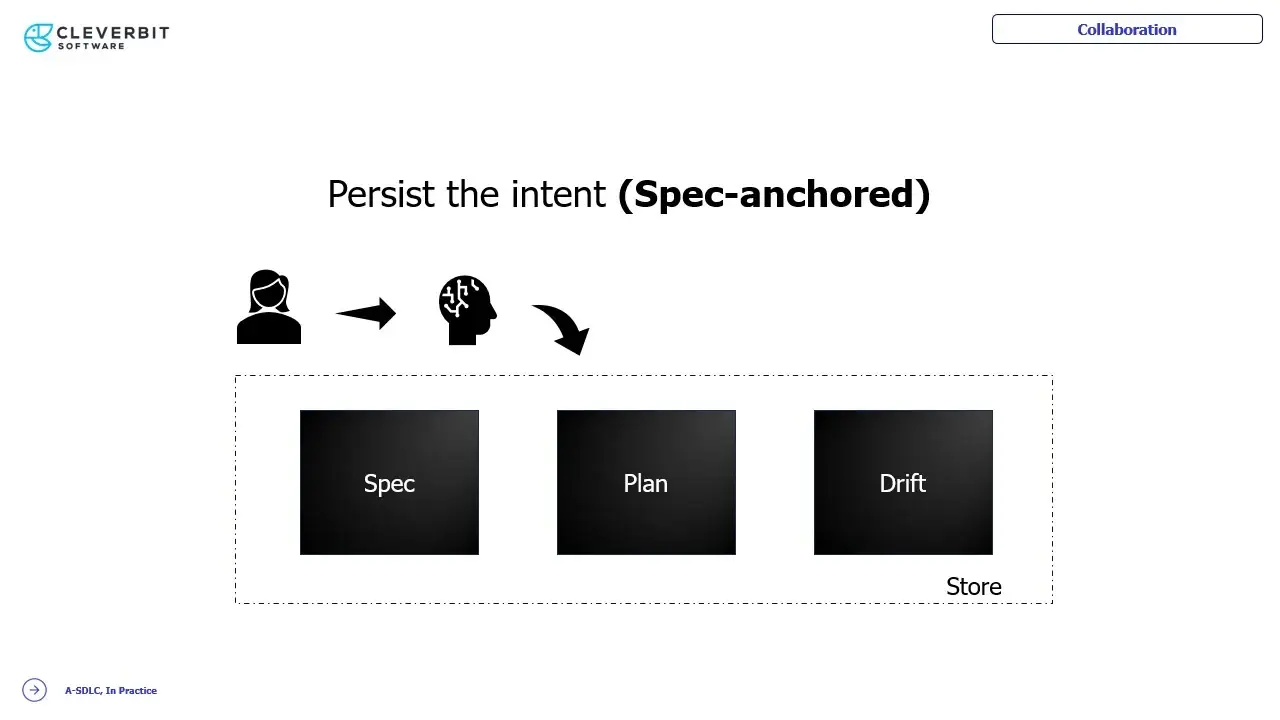
- How to set intent through specs and plans that AI cannot quietly reinterpret
- How to build a context engineering harness that keeps agents focused
- Structuring verification & risk-based review for quality to scale with output
- How to threat model the tooling itself, not just the systems it builds
- How to measure adoption, speed and quality together, not adoption alone
What’s Inside
Vibe code drift: Names the core problem: the widening gap between what a developer intended and what an agent produced, and why clean-looking AI code creates false confidence.
Team collaboration and governance: Covers shared understanding, accountability, traceability and the operating model teams need at organisational scale.
Setting intent and context engineering: Covers contracts, specs and plans, and the harness of context that shapes what an agent actually builds.
Measuring what matters, and Nissy in practice: Covers the three pillars worth tracking together, and a worked example of Nissy, Cleverbit’s own tool for catching drift before it ships.
Who this is for
This field guide is written for:
CTOs, Engineering Managers & Technical Leads
Teams adopting AI agents who are worried about quality, drift and accountability
Regulated and enterprise teams that cannot treat speed and control as a trade-off
If you’re responsible for what ships, this is for you.
about the authors
 Free PDF. No Fluff. No spam.