
RETAIL & INVENTORY MANAGEMENT
Retail & Inventory Management
Software Development
Turn Inventory Data Into a Product, Not Just a Report
Retailers and inventory management providers sit on more data than they know what to do with: scan counts, store-level performance, shrinkage patterns, compliance checks. The businesses that win are not the ones with the most data. They are the ones that can turn it into a dashboard a store manager or a client actually reads and acts on.
THE CHALLENGE
Data without a way to use it
Inventory and retail businesses run on numbers pulled from scanning systems, POS platforms and warehouse operations, often across multiple clients, regions and store formats. The raw data usually exists. What is missing is a way to consolidate it, make sense of it and put it in front of the people who need it, whether that is a regional manager, a retail client or a finance team

- Consolidate data from multiple sources into clear, KPI-driven reporting
- Reduce inventory loss caused by counting errors and process gaps
- Build visualizations that non-technical store and client teams can actually read
- Process high volumes of scanning and transaction data without slowing reporting down
- Turn internal analytics into a product clients will pay for
Where most teams struggle
Data spread across formats and systems: Scanning, POS and warehouse data rarely lives in one place, and reconciling it manually eats the time that should go into analysis.
Terabyte-scale data with no clear architecture: As data volume grows, ad hoc reporting tools stop scaling, and performance degrades exactly when clients need speed most.
Reports built for analysts, not for stores. Dashboards designed by data teams often assume a level of technical fluency that store managers and retail clients do not have and do not want.
Analytics that stay a cost centre instead of becoming a product: Internal reporting capability often never turns into something that could be sold back to clients as a service.
Shrinkage and accuracy issues hidden in the noise: Without clear KPI structure, the specific process gaps causing inventory loss get buried under raw volume.
OUR APPROACH
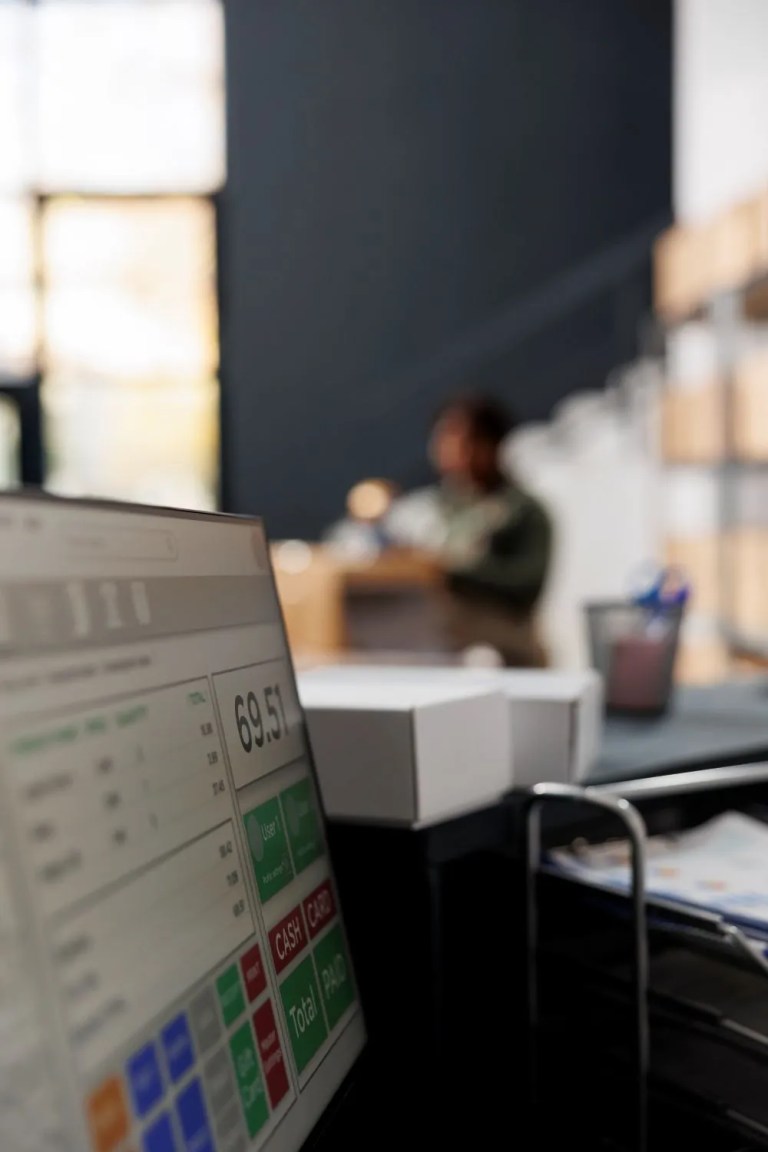
From raw data to a reporting product
Domain-led data modeling: We work directly with the people who understand the inventory process to define the KPIs and structures that matter, rather than defaulting to generic reporting metrics.
Dashboards built for the end reader: Reports are designed for store managers, retail clients and non-technical stakeholders first, with clear visual hierarchy and filtering that cuts out noise instead of adding to it.
Agile delivery with visible progress: We run in short sprints with regular deliverables, so the business sees working reports early and can redirect before too much is built in the wrong direction.
Architecture that scales with data volume: Reporting platforms are built to handle terabyte-scale processing from the start, so performance holds up as data volume and client count grow.
What we help you build
- Business intelligence and analytics dashboards for retail and inventory operations
- KPI reporting covering accuracy, productivity and compliance
- Year-over-year and store-level performance comparisons
- Data pipelines consolidating scanning, POS and warehouse sources
- Client-facing reporting products built on internal analytics capability
- Inventory and shrinkage tracking tools for multi-store, multi-client operations

Why health tech teams work with us
We start with the people who understand the inventory process, not a template dashboard. Reports are built for the person reading them, whether that is a store manager or a retail client, not for the analyst who built the data model. Delivery runs in short, visible sprints, so you see working reports early rather than waiting months for a single big reveal. And what we build is designed to scale into a product you can sell, not just an internal reporting tool.
If your retail or inventory business has data it has not yet turned into insight, we should talk.