
Google’s Project Aristotle revealed that psychological safety, not individual talent, predicts team success. Yet most tech leaders still underestimate interpersonal and operational risks when scaling engineering teams. Risk reduction in team building directly impacts project delivery, innovation capacity, and competitive advantage. This article reveals evidence-based strategies to identify, assess, and mitigate team risks while fostering resilient, high-performing software development organizations.
Introduction to Risk in Team Building
Team building in scaling tech organizations involves three critical risk categories. Interpersonal risks arise from personality conflicts, communication breakdowns, and trust deficits. Operational risks include unclear roles, process gaps, and resource constraints. Strategic risks emerge when team capabilities misalign with business objectives or market demands.
Unmanaged risks cascade into costly consequences. Projects miss deadlines when team conflicts consume productive time. Innovation stalls when engineers fear proposing unconventional solutions. Talent attrition accelerates when operational chaos creates burnout. A 2025 study of 500 tech companies found that teams with high interpersonal risk experienced 40% longer development cycles and 25% higher turnover.
Scaling engineering teams amplifies these risks exponentially. What works for a 10-person team fails at 50 people without deliberate risk management. Communication paths multiply, coordination overhead increases, and cultural dilution threatens team cohesion. Companies that address these challenges proactively maintain velocity while growing.
Structured, evidence-based team development interventions outperform unstructured social activities in reducing operational risks and improving team functionality. Research shows structured approaches deliver measurable improvements in collaboration, decision quality, and project outcomes. Leaders who invest in systematic risk reduction create sustainable competitive advantages through superior team performance.
Key risk indicators in team building include:
- Communication frequency and quality declining over time
- Increasing conflict escalation requiring leadership intervention
- Knowledge silos forming across team boundaries
- Decision-making speed slowing as coordination complexity grows
- Innovation metrics dropping as team size expands
Recognizing these patterns early enables targeted interventions before risks materialize into project failures. Organizations implementing de-risking software development frameworks report faster time-to-market and higher quality deliverables. The high-performance team playbook provides structured approaches to identify and address risks systematically.
Leaders can leverage team risk assessment tools to establish baselines and track improvement over time. Regular assessment creates visibility into emerging risks and validates mitigation strategies through data.
Psychological Safety and Risk Reduction
Psychological safety describes team climates where members feel safe taking interpersonal risks without fear of embarrassment or punishment. In psychologically safe teams, engineers challenge assumptions, admit mistakes, and propose bold ideas. This openness creates early warning systems for risks that would otherwise remain hidden until critical.
Psychological safety is foundational to effective risk reduction because it enables open communication, innovation, and willingness to take smart risks without fear of reprisal. Google’s Project Aristotle analyzed hundreds of teams and identified psychological safety as the single strongest predictor of team effectiveness, outweighing individual talent or resource availability.
When team members trust they can speak up, they surface risks early. A junior developer flags a potential security vulnerability without fearing blame. A product manager challenges an unrealistic deadline before commitments lock in. These micro-interventions prevent macro-failures.
“The best teams create environments where vulnerability is strength, not weakness. Leaders who model admitting uncertainty and asking for help unlock team potential.”
Leadership actions that cultivate psychological safety include:
- Modeling vulnerability by sharing mistakes and lessons learned publicly
- Responding to bad news with curiosity instead of blame
- Framing failures as learning opportunities with systematic retrospectives
- Establishing explicit norms for constructive disagreement
- Recognizing and rewarding risk identification and transparency
Pro Tip: Start every team meeting by asking “What’s something you’re uncertain about?” and sharing your own uncertainty first. This simple practice normalizes vulnerability and encourages honest communication about risks.
Measuring psychological safety requires both quantitative and qualitative approaches. Anonymous surveys assess team members’ comfort with risk-taking and speaking up. One-on-one conversations reveal concerns individuals may not share publicly. Observation of team dynamics during meetings shows whether dissent receives genuine consideration.
Organizations serious about psychological safety and team performance invest in training leaders to facilitate rather than dominate discussions. They create feedback channels that protect anonymity while ensuring issues receive attention. They measure safety metrics alongside productivity metrics, recognizing the causal relationship.
Risk Identification and Mitigation Strategies
Proactive risk identification prevents small issues from becoming project-threatening crises. Effective identification combines systematic assessment with ongoing monitoring through multiple channels.
Steps for comprehensive risk identification:
- Conduct initial team assessments using validated instruments measuring communication, trust, and role clarity
- Establish regular retrospectives with specific focus on emerging risks and near-misses
- Create anonymous feedback channels for team members to surface concerns without attribution
- Implement peer observation where team members give structured feedback on collaboration patterns
- Track leading indicators like meeting effectiveness, decision velocity, and cross-functional collaboration
Once identified, risks require tailored mitigation based on type and severity. Common mitigation tactics include:
- Establishing explicit communication protocols for distributed teams
- Creating conflict resolution frameworks with clear escalation paths
- Implementing pair programming or code review processes to distribute knowledge
- Defining decision rights to eliminate ambiguity and reduce coordination overhead
- Building redundancy into critical path activities to absorb unexpected delays
| Mitigation Technique | Primary Risk Addressed | Impact on Team Performance | Implementation Complexity |
| Daily standups | Coordination and alignment | 15-20% improvement in sync | Low |
| Pair programming | Knowledge silos and quality | 25-30% reduction in defects | Medium |
| Retrospectives | Process and interpersonal | 20-25% faster iteration | Low |
| Role clarity workshops | Ownership ambiguity | 30-35% clearer accountability | Medium |
| Cross-functional pairing | Silo formation | 40-45% better collaboration | High |
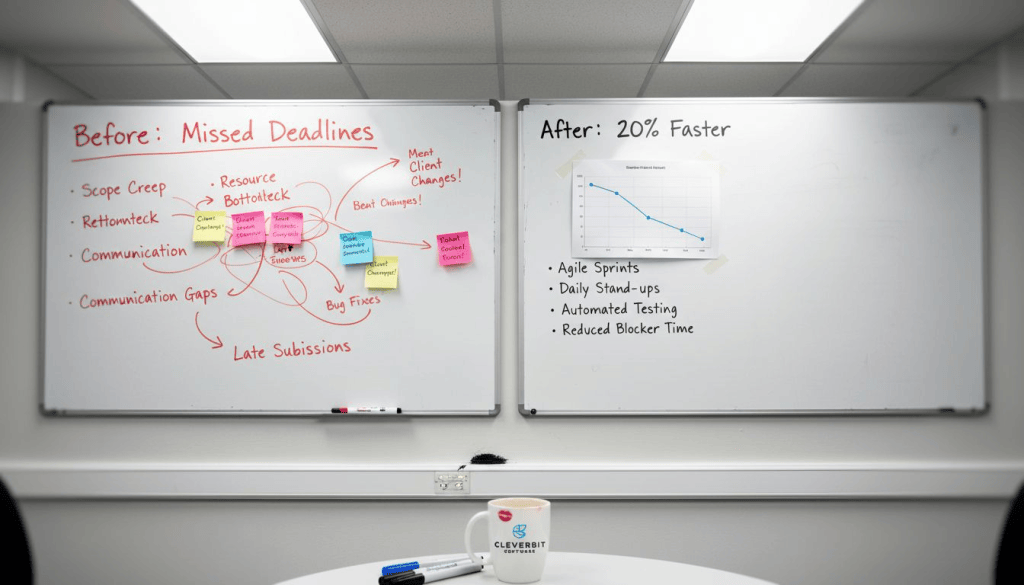
Structured interventions improve team functionality and productivity by over 20% compared to teams without systematic approaches. The data demonstrates that investment in deliberate risk management yields measurable returns in delivery performance and team resilience.
Pro Tip: Use bi-weekly retrospectives as risk radar sessions. Ask “What almost went wrong this sprint?” to identify near-misses that signal emerging risks before they materialize into actual problems.
Leaders implementing these strategies need team risk assessment tools to establish baselines and measure progress. Effective tools combine self-assessment with behavioral observation to provide comprehensive risk profiles. Organizations pursuing scalable software team strategies build risk management into their growth playbooks from day one.
Personality-Based Approaches to Risk Reduction
Team composition directly impacts interpersonal risk levels. Homogeneous teams experience groupthink and blind spots. Diverse teams with complementary personalities and skills create more resilient decision-making but require deliberate management to prevent conflict.
Personality assessments reduce interpersonal risks by creating shared language for differences. When team members understand that a colleague’s direct communication style reflects personality rather than hostility, they interpret interactions more accurately. This awareness prevents misunderstandings from escalating into conflicts.
Benefits of personality-informed team building:
- Anticipating potential conflict areas based on personality differences before they emerge
- Assigning roles that align with individual strengths and work preferences
- Creating communication norms that accommodate diverse styles
- Building appreciation for cognitive diversity as a strategic asset
- Reducing friction in collaboration through mutual understanding
Successful integration of personality tools requires moving beyond one-time assessments to ongoing application. Teams reference personality insights during retrospectives when analyzing collaboration challenges. Leaders use personality data to form balanced subteams for complex projects. Organizations embed personality considerations into hiring and team composition decisions.
Complementary skill diversity provides natural risk mitigation through redundancy and perspective variety. When multiple team members can perform critical tasks, the team absorbs illness, attrition, or competing priorities without derailing. When engineers, designers, and product managers collaborate from project inception, they identify risks that siloed specialists miss.
The impact extends beyond conflict reduction to innovation acceleration. Teams with high cognitive diversity generate more creative solutions because members challenge assumptions from different frameworks. This diversity of thought creates built-in risk review as team members naturally question approaches from varied perspectives.
Organizations serious about personality-based risk reduction integrate assessments into their team building programs systematically. They train leaders to leverage personality insights in team formation, conflict resolution, and performance management. They create team charters that explicitly acknowledge and value personality differences.
Balancing Risk Reduction and Smart Risk-Taking
Effective risk management is not risk elimination. Organizations that avoid all risks stagnate while competitors innovate. The goal is reducing unnecessary risks while enabling strategic risks that drive competitive advantage.
Effective risk reduction balances avoiding unnecessary risks with strategic, smart risk-taking to foster innovation and agility. Organizations achieve this balance by distinguishing between risks that threaten core operations and risks that enable breakthrough outcomes.
Unnecessary risks stem from poor planning, communication failures, or process gaps. These risks add no value and should be eliminated. Strategic risks involve conscious choices to pursue uncertain opportunities with significant upside potential. Launching an experimental product feature, adopting a new technology, or entering an unfamiliar market all carry risk but create competitive differentiation.
Teams with high connection and courage outperform others in smart risk-taking, leading to more innovation. Connection provides the trust foundation that enables courage. When team members believe colleagues support them, they propose bold ideas and experiment with novel approaches.
Cultivating a culture that supports calculated risks requires:
- Separating acceptable failures from unacceptable failures through explicit criteria
- Celebrating experiments that generate valuable learning even when unsuccessful
- Allocating dedicated time and resources for exploration without delivery pressure
- Protecting team members from political consequences of well-reasoned failures
- Sharing post-mortems on failed experiments to extract organizational learning
“Innovation requires embracing intelligent failures while eliminating preventable ones. The distinction lies in whether the risk was worth taking given available information.”
Leaders model this balance by taking visible risks themselves and discussing their decision-making process transparently. When executives share how they weighed potential downsides against upsides before green-lighting an initiative, they teach teams to think strategically about risk.
Measuring this balance involves tracking both risk mitigation metrics and innovation metrics. Teams should show declining preventable failures over time while maintaining or increasing experimental initiatives. Organizations achieving this balance report higher innovation rates without corresponding increases in operational incidents.
Practical implementation of risk-taking balance in teams requires frameworks that classify risks and decision rights that empower teams. Clear boundaries enable autonomy within acceptable risk tolerances.
Cleverbit’s Approach to Risk Reduction in Team Building
Cleverbit’s integrated team model addresses risk reduction through structural design rather than reactive management. By building long-term teams that operate as extensions of client organizations, Cleverbit eliminates common outsourcing risks while maintaining flexibility and scalability.
Traditional outsourcing creates inherent risks. Vendor lock-in limits flexibility when requirements change. Misaligned incentives prioritize contract compliance over outcomes. Knowledge concentration in external teams creates dependency. Communication barriers across organizational boundaries slow decision-making.
Cleverbit’s dedicated teams mitigate these risks through several mechanisms. Teams integrate directly into client workflows using the same tools, processes, and communication channels. Long-term engagement enables deep product and domain knowledge that eliminates ramp-up delays. Transparent operations provide visibility into team dynamics and early warning of potential issues.
| Risk Factor | Traditional Outsourcing | Cleverbit Integrated Teams |
| Vendor lock-in | High dependency, difficult transitions | Client ownership option, seamless transitions |
| Alignment | Contract-driven, output focus | Outcome-driven, strategic partnership |
| Knowledge retention | Concentrated with vendor | Distributed across client and team |
| Flexibility | Change orders, delays | Agile adaptation to evolving needs |
| Communication | Cross-organizational barriers | Integrated workflows and tools |
The SPV model Cleverbit offers for team transitions eliminates the risk of losing critical talent when bringing development in-house. Clients can take ownership of high-performing teams without disruption, preserving relationships and institutional knowledge.
Case outcomes demonstrate the risk reduction advantage. Clients report faster time-to-market because integrated teams anticipate needs and proactively address potential bottlenecks. Innovation accelerates because team members feel psychological safety to propose bold ideas. Quality improves because teams take ownership rather than meeting minimum specifications.
Executives considering team expansion should evaluate how team structure itself introduces or mitigates risk. Scalable software teams built on integrated models reduce coordination overhead and maintain quality as they grow. High-performance teams emerge from environments that combine autonomy with accountability. Transparent development approaches create visibility that enables early risk detection.
Common Misconceptions About Risk Reduction in Team Building
Several widespread myths undermine effective risk reduction in team building. Addressing these misconceptions enables more sophisticated risk management strategies.
Myth 1: Risk reduction means avoiding all risks. Effective risk reduction balances avoidance with necessary innovation. Organizations that eliminate all risk eliminate all innovation. The goal is reducing unnecessary risks while enabling strategic risks that drive competitive advantage.
Myth 2: Psychological safety reduces accountability. The opposite is true. Psychologically safe teams hold higher standards because members feel secure giving and receiving honest feedback. When team members trust they can discuss performance issues constructively, they address problems earlier and more effectively.
Myth 3: Team conflicts always signal risk. Healthy conflict over ideas drives better decisions. The risk lies in personal conflicts or unresolved disagreements that fester. Teams need frameworks to distinguish productive debate from destructive dysfunction.
Myth 4: Personality assessments eliminate interpersonal risk. Assessments provide insight but not solutions. Teams still need communication skills, conflict resolution processes, and leadership that models healthy interaction. Personality data informs these efforts but does not replace them.
Myth 5: Risk reduction is a one-time exercise. Team dynamics evolve as membership changes, projects shift, and organizations grow. Effective risk management requires ongoing assessment and adaptation. What worked for a 10-person team fails at 50 people without evolution.
Common risk reduction mistakes:
- Implementing generic team-building activities without assessing specific team risks
- Measuring activity completion rather than risk reduction outcomes
- Addressing symptoms rather than root causes of team dysfunction
- Assuming homogeneous teams reduce risk when they actually increase groupthink
- Focusing exclusively on technical risks while ignoring interpersonal dynamics
Leaders who understand these nuances implement more effective interventions. They recognize that risk reduction is ongoing work requiring continuous attention. They invest in building capabilities rather than quick fixes. They measure outcomes rather than activities.
Organizations working to debunk risk misconceptions create educational programs for leaders and teams. They share case studies demonstrating successful risk management approaches. They build risk literacy across the organization.
Practical Steps for Tech Leaders to Implement Risk Reduction
Implementing effective risk reduction requires systematic approaches that embed risk management into team operations rather than treating it as separate initiative.
Step 1: Assess current risk profile across interpersonal, operational, and strategic dimensions. Use validated assessment tools to establish baselines. Gather quantitative data through surveys and qualitative insights through interviews. Identify the highest-priority risks based on likelihood and potential impact.
Step 2: Establish psychological safety as the cultural foundation. Train leaders in facilitation skills that encourage participation and diverse perspectives. Create explicit norms for how teams handle disagreement and failure. Model vulnerability by sharing your own uncertainties and mistakes.
Step 3: Implement personality assessments and skill mapping to understand team composition. Use insights to form balanced teams, anticipate potential conflicts, and assign roles aligned with strengths. Create team charters that acknowledge and value differences.
Step 4: Design governance and communication structures appropriate for team size and distribution. Define decision rights clearly to eliminate ambiguity. Establish regular cadences for synchronization, retrospectives, and strategic planning. Create channels for both formal and informal communication.
Step 5: Build measurement systems that track leading indicators of team health. Monitor communication patterns, decision velocity, conflict resolution speed, and innovation metrics. Review trends regularly and adjust interventions based on data.
Step 6: Invest in continuous learning for both leaders and teams. Provide training in communication, conflict resolution, and collaboration skills. Share lessons learned across teams to build organizational capability. Stay current with research on team effectiveness.
Step 7: Iterate and refine based on experience. What works in theory may need adaptation for your specific context. Gather feedback on risk management processes and evolve them. Celebrate improvements and share successes to build momentum.
Pro Tip: Embed risk discussions into existing meetings rather than creating separate risk review sessions. Ask “What risks are we not seeing?” during sprint planning. Include “What almost went wrong?” in retrospectives. This integration makes risk management habitual rather than exceptional.
Leaders implementing these steps should reference proven frameworks like the high-performance team playbook for detailed guidance. The key is moving from awareness to action systematically.
How Cleverbit Supports Risk-Reduced Team Building
Cleverbit’s expertise in building and managing high-performance software development teams provides practical solutions for organizations seeking to reduce scaling risks. Their integrated team model addresses the core challenges tech leaders face when expanding engineering capacity.
By providing fully managed high-performance teams that operate as extensions of client organizations, Cleverbit eliminates vendor lock-in and misalignment risks. Teams integrate directly into client workflows, using the same tools and processes to ensure seamless collaboration. This approach maintains the flexibility of external resources while delivering the alignment of internal teams.
Cleverbit’s focus on long-term relationships rather than transactional projects reduces knowledge loss and ramp-up overhead. Teams develop deep understanding of client products, domains, and cultures, enabling them to anticipate needs and proactively address risks. The scalable software development solutions Cleverbit offers maintain quality and velocity as teams grow.
For executives evaluating development partnerships, Cleverbit serves as a software development partner focused on outcomes rather than outputs. Their transparent approach creates visibility into team dynamics and project health, enabling early intervention when risks emerge.
Frequently Asked Questions About Risk Reduction in Team Building
What are the main risks in software team building?
The three primary risk categories are interpersonal risks like personality conflicts and communication breakdowns, operational risks including unclear roles and process gaps, and strategic risks when team capabilities misalign with business objectives. Unmanaged interpersonal risks lead to collaboration failures, operational risks cause delays and quality issues, and strategic risks result in wasted effort on wrong priorities.
How can psychological safety be measured in engineering teams?
Measure psychological safety through anonymous surveys asking whether team members feel safe taking risks and speaking up, plus behavioral observation of meeting dynamics to see if dissent receives genuine consideration. Track leading indicators like the frequency of questions asked, challenges raised, and mistakes admitted openly. Combine quantitative survey data with qualitative insights from one-on-one conversations to get a complete picture.
What makes personality assessments effective in reducing team conflict?
Personality assessments create shared language for understanding differences, helping team members interpret behaviors as personality expressions rather than personal attacks. When teams understand that a colleague’s direct communication reflects their style rather than hostility, they respond constructively instead of defensively. Assessments work best when integrated into ongoing team operations, not just administered once and forgotten.
How do you balance risk reduction with innovation?
Distinguish between unnecessary risks stemming from poor planning that add no value and strategic risks involving conscious choices to pursue uncertain opportunities with breakthrough potential. Eliminate preventable failures through better processes while encouraging intelligent failures that generate learning. Create explicit criteria for acceptable versus unacceptable risks, allocate dedicated resources for experimentation, and celebrate well-reasoned attempts that don’t succeed.
What is the first step to implement risk reduction in an existing team?
Start with comprehensive assessment of current risk profile across interpersonal, operational, and strategic dimensions using validated tools and structured interviews. Establish baseline metrics for team health indicators like communication quality, conflict resolution speed, and decision velocity. Use assessment insights to prioritize the highest-impact interventions rather than generic team-building activities that may not address your specific risks.
How often should teams reassess their risk profile?
Conduct lightweight risk check-ins during regular retrospectives every sprint or month, with comprehensive reassessments quarterly or when major changes occur like significant team growth or leadership transitions. Continuous monitoring of leading indicators enables early detection of emerging risks before they materialize into problems. Treat risk management as ongoing work requiring regular attention rather than periodic projects.